
The Persuasive Salesperson™: Persuasion Skills Training for Sales Teams
The competition in business is fierce, and companies are battling each other to catch the consumer's eye in an environment where the product itself rarely makes the difference anymore. In such an environment, what makes the deal is the ability of the salesperson to convince, not just sell. This persuasion skills training exists precisely to help a sales professional convince without pressuring or relying on tricks.

Brands We've Worked With














What is The Persuasive Salesperson™ Program
There is one basic assumption at the foundation of The Persuasive Salesperson™: persuasion is a skill, not a trait some salespeople are born with and others simply aren't. Developed by Persona GLOBAL® and delivered in India through DTCI, this persuasion skills training program has earned international acclaim precisely because it treats influence as something that can be diagnosed, practised, and improved, rather than a personality trait a manager either has on the team or doesn't.
This program is validated against real work challenges rather than built around theoretical psychology. Participants receive feedback on how their business associates actually perceive their natural communication style, their ability to project empathy, and their level of interpersonal flexibility, and that feedback becomes the starting point for a tailored action plan rather than a generic script handed to everyone in the room.
Traditional sales training usually teaches one script used for every type of customer, regardless of who is sitting across the table. The Persuasive Salesperson™ works differently: it starts with an honest read of both the seller's own style and the buyer's style, and only then builds a persuasion strategy around that specific combination.
That distinction matters more than it sounds. A rep who has memorised objection-handling lines can still lose a deal to a buyer who simply doesn't trust them yet, while a rep who understands how to read a buyer's style and build trust first can consistently out-perform a more experienced colleague working from a fixed script.
The Science Behind Persuasive Selling
Persuading and influencing a customer's choices without the right skills is a genuinely difficult task, whether the person doing the selling is a seasoned account manager or someone new to the profession entirely. An unstructured approach that relies purely on pressure or a rehearsed script tends to work less and less as buyers become more informed and more sceptical of anything that sounds like a pitch. This is exactly the gap this training is designed to close.
Without structure and calibration, a sales team tends to end up in one of two places: pushing too hard and driving away a customer who was already hesitant, or holding back so much that they never actually ask for the business. Persuasion training helps a rep find the middle ground between those extremes, using a technique calibrated to the specific buyer in front of them rather than one generic approach applied to everyone.
This is also why persuasion skills training has stopped being treated as a nice-to-have soft-skills workshop and has become a genuine boardroom priority at companies selling into commoditised markets. Where product features, pricing, and delivery timelines have converged across competitors, a salesperson's ability to build trust and persuade becomes one of the only remaining differentiators left to compete on.
Client Success: Persuasive Selling Results
Real outcomes, in the words of the leaders and organisations we've worked with, on the same coaching and capability-building rigour that underpins this program.
HMIL partnered with BYLD for the Group Coaching sessions under TrailBlazHer, HMIL's women leadership development program, and the experience was highly impactful. The two coaches assigned by BYLD demonstrated strong expertise, empathy, and a structured coaching approach that resonated well with the participants. The sessions created a safe and engaging space for reflection, learning, and actionable development discussions. Overall, the coaching intervention added meaningful value in building self-awareness, confidence, and leadership capabilities among the participants, and we truly appreciated BYLD's professional partnership and delivery.
Program Modules & Methodology
A 16-Hour Methodology Built Around Your Own Case Study
Persuasive Salesperson™ is a 16-hour skill-training methodology based on the Persona GLOBAL® Social Styles and trust-building approach, refined over more than twenty years into one of the most widely used persuasion-skills methodologies in the world. Before the seminar begins, each participant selects an actual person, usually someone who has genuinely given them trouble in the past, to use as their case study for the remainder of the program.
Over the course of the workshop, participants use feedback from up to five of their own business contacts to analyse their natural communication style and identify the specific gaps in their ability to build trust with others. This is what separates the method from standard persuasive-communication training: the feedback is not invented for the classroom, it comes from real colleagues who deal with that participant every week.
By the end of the program, every participant has built an individualised action plan using Persona GLOBAL®'s game-planning software, and has already tested a new way of communicating with their chosen case study before ever trying it out on a live customer. The result is a program that builds the skills for trust, positive influence, and win-win outcomes deliberately, rather than leaving persuasion to chance.
Interactive Workshops
Facilitator-led sessions where participants practise reading social styles and building trust in real time, rather than only discussing theory.
Virtual Training Sessions
The same methodology delivered live online for distributed teams, compressed into a six-hour format without losing the case-study structure.
Case Studies
Each participant's own chosen colleague becomes their working case study for the full duration of the program, rather than a hypothetical classroom scenario.
Practical Exercises
Structured exercises built around the feedback participants receive from their five business contacts, turning that input into a specific, actionable plan.
Persona GLOBAL® Social Styles Framework
 Methodology developed by Persona GLOBAL®
At the heart of this program is the Social Styles model, which helps a seller understand how different individuals instinctively prefer to be communicated with, how they make decisions, and how they build trust. A buyer who decides quickly and wants a straight answer needs a fundamentally different persuasion strategy than someone who wants to build a relationship before taking any step forward. Salespeople who haven't gone through this style-mapping process tend to treat every prospect the same way, regardless of which style that person actually displays.
Building trust is treated as something that has to happen before persuasion is attempted, not something that develops naturally after the sale is already made. A person who tries to sell before establishing any trust will almost always be read as manipulative, no matter how rational their argument actually is.
Most training programs on the market teach universal rapport-building tips without a model behind them that actually explains why those tips work. The Persona GLOBAL® methodology is different in a concrete, checkable way: it is built on the Social Styles and Trust-Building models Persona GLOBAL® has developed and refined over more than three decades.
It is also delivered in the local language and adapted culturally by business professionals, rather than translated word-for-word from a fixed international script. As part of the BYLD Group, DTCI delivers this world-class program with the same rigour it brings to all of its other sales and leadership training.
Key Skills You Will Master
Four Capabilities Built Around a Real Working Relationship
Participants who complete this program walk away with four specific capabilities, each tied directly to the real case study they worked through during the program rather than an abstract competency that only sounds good on a certificate.

Mastering Persuasive Communication
Learning the underlying principles of persuasive communication and applying them directly to real sales scenarios, from understanding a customer's actual needs through to crafting a genuinely compelling pitch.

Building Rapport and Trust
Learning proven techniques for building trust with customers early in a relationship, so that later persuasion attempts are read as helpful rather than manipulative.

Handling Objections
Learning to anticipate and address objections as they arise, turning what could be a dead end into a further opportunity to persuade rather than a reason to walk away.

Closing Techniques
Learning a range of closing approaches suited to different buyer styles, so the close feels like a natural next step rather than a pressured final push.
Who Should Attend This Persuasion Skills Training
This persuasion skills training is built for any salesperson, regardless of experience, from someone who just started in the profession to a professional account manager who has already closed many deals but wants a systematic process to back their instincts. That range works because the training is based on the case study of the individual trainee, combined with the feedback they receive from their own real colleagues, not a one-size script handed to a room full of strangers.
It is equally valuable for sales managers and supervisors. Once a team shares a common language for social styles, trust-building, and the core elements of persuasion, coaching a rep after the workshop becomes a matter of specific, shared vocabulary rather than a vague instruction to "be more persuasive."
Program Formats & Duration
The Persuasive Salesperson™ is offered in two versions: a face-to-face program delivered over two full days, or a virtual program compressed into six hours, giving organisations the flexibility to choose based on their sales team's schedule and location. Both versions include identical training components: workshops, virtual learning, case studies, and exercises.
In-Person Format
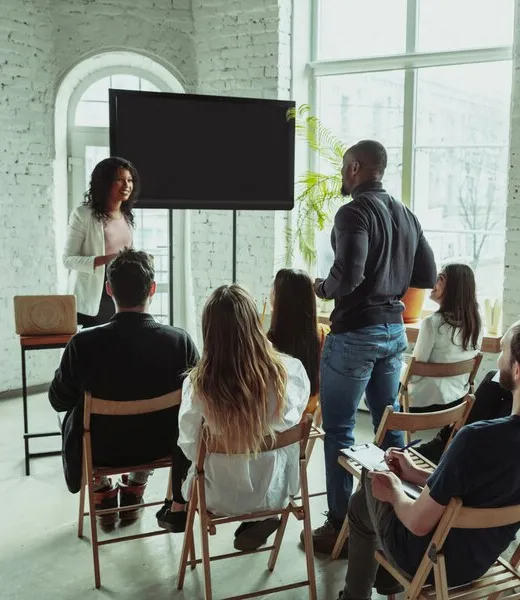
Delivered over two full days in a classroom setting, giving participants time to work through their case study feedback and build their action plan with facilitator support throughout.
Virtual Format
The same 16-hour methodology compressed into a six-hour live virtual session, letting distributed sales teams complete the program without travel.
Timed to a Live Sales Cycle
Because each participant works from a real case study, most organisations schedule this program close to a new sales cycle or quarter, when reps have a live account to apply their new approach to immediately.
How Participants Apply Persuasive Selling at Work
Even the most well-designed workshop is meaningless unless the new way of communicating shows up in the very next customer interaction. Because each participant builds their plan around a real person, not a hypothetical scenario, the test of success is straightforward: has the interaction with that specific case study person changed, and was it noticeable to the participant themselves? That immediacy is one of the reasons organisations find this program's results last longer than a typical workshop's.
Sales managers reinforcing the approach afterward don't need to invent new coaching language either. Because every participant has been through the same style-mapping exercise, a manager can ask a rep directly which style a difficult prospect displays and what approach that calls for, instead of offering vague, generic feedback like "be more persuasive" or "build more rapport," phrases that rarely change anything on their own.
Although the lesson is taught through a sales lens, the underlying skill, reading how someone prefers to be communicated with and adjusting accordingly, applies well beyond a single customer interaction. An account manager uses it during a renewal discussion, where different stakeholders need to be convinced in different ways. A client-side consultant uses it to build trust with a new client team they've never met before.
A Long, Regulation-Heavy Sales Cycle
Where trust has to be earned over a long, regulation-heavy sales cycle, participants lean more heavily on the trust-building phase of the program before any persuasion attempt begins.
Fast Deals, Shorter Relationships
In FMCG and retail, where deals close faster and relationships are shorter, participants lean more on rapid style-reading and a confident, well-timed close.
Two Buyers, One Meeting
In technology sales, where a technical evaluator and a commercial decision-maker sit on the same buying committee but want fundamentally different things, participants adjust their approach within a single meeting, sometimes within a single sentence.
One Shared Vocabulary
Across every sector, the same style-mapping language lets a manager and a rep discuss a difficult account precisely, instead of relying on vague, generic feedback that rarely changes behaviour.
FAQs: Persuasive Selling
Answers to the questions L&D heads and sales leaders most often ask before enrolling their teams.
How can I improve my persuasion and influence skills?
Persuasion is a skill that can be deliberately developed rather than something a person either has or doesn't. Focusing on clarity, empathy, and active listening, learning principles like reciprocity and social proof through persuasion skills training, developing negotiation skills for win-win outcomes, and seeking regular feedback from peers and mentors all contribute meaningfully to improvement over time.
What are the core principles behind sales persuasion techniques?
The sales tactics that are well-known are reciprocity, scarcity, authority, consistency, liking, and consensus. Reciprocity means one should give before taking; scarcity is about limited supply; authority means a credible source; consistency means smaller commitments leading to bigger ones; liking means building a relationship; and consensus means social proof of choice.
How is persuasive selling training different from generic sales training?
Traditional sales training usually involves teaching one script that is used for all types of customers. In persuasive selling training, it begins with an understanding of both the selling and buying styles of the individual, and a strategy is formed based on this.
What skills can I expect from an influence training for sales course?
An influence training for sales course typically covers communication techniques, understanding buyer behaviour, building rapport, negotiation strategies, and overcoming objections, along with practical skills in tailoring a message to different audiences and personality styles.
Why does building trust matter more than closing technique alone?
A buyer's distrust of the seller can cause them to perceive even an effective closing strategy as manipulation. Building that trust is crucial since it gives a solid foundation to the subsequent persuasion attempts, which is exactly why it is addressed before closing.
Is this program suitable for experienced sales professionals, not just newcomers?
Yes. Because the program is built around each participant's own real case study and personal feedback from colleagues, The Persuasive Salesperson™ works as well for a veteran account manager refining their approach as it does for someone new to sales entirely.
Does this training improve overall employee performance, not just sales numbers?
Yes. Persuasion skills training strengthens communication, emotional intelligence, and the ability to influence positively across any role, not only direct sales, which means the same skills often show up in better internal collaboration and stronger working relationships beyond the sales function itself.
Is this persuasive communication training available virtually for distributed teams?
Yes. This program is available as a six-hour virtual option in addition to the two-day in-person format, so distributed sales teams across multiple cities can complete the same persuasive communication training without travelling.