A sales manager I once worked with had a saying that stuck with me: “We train people to pass the assessment, then wonder why nothing changes on the floor.”
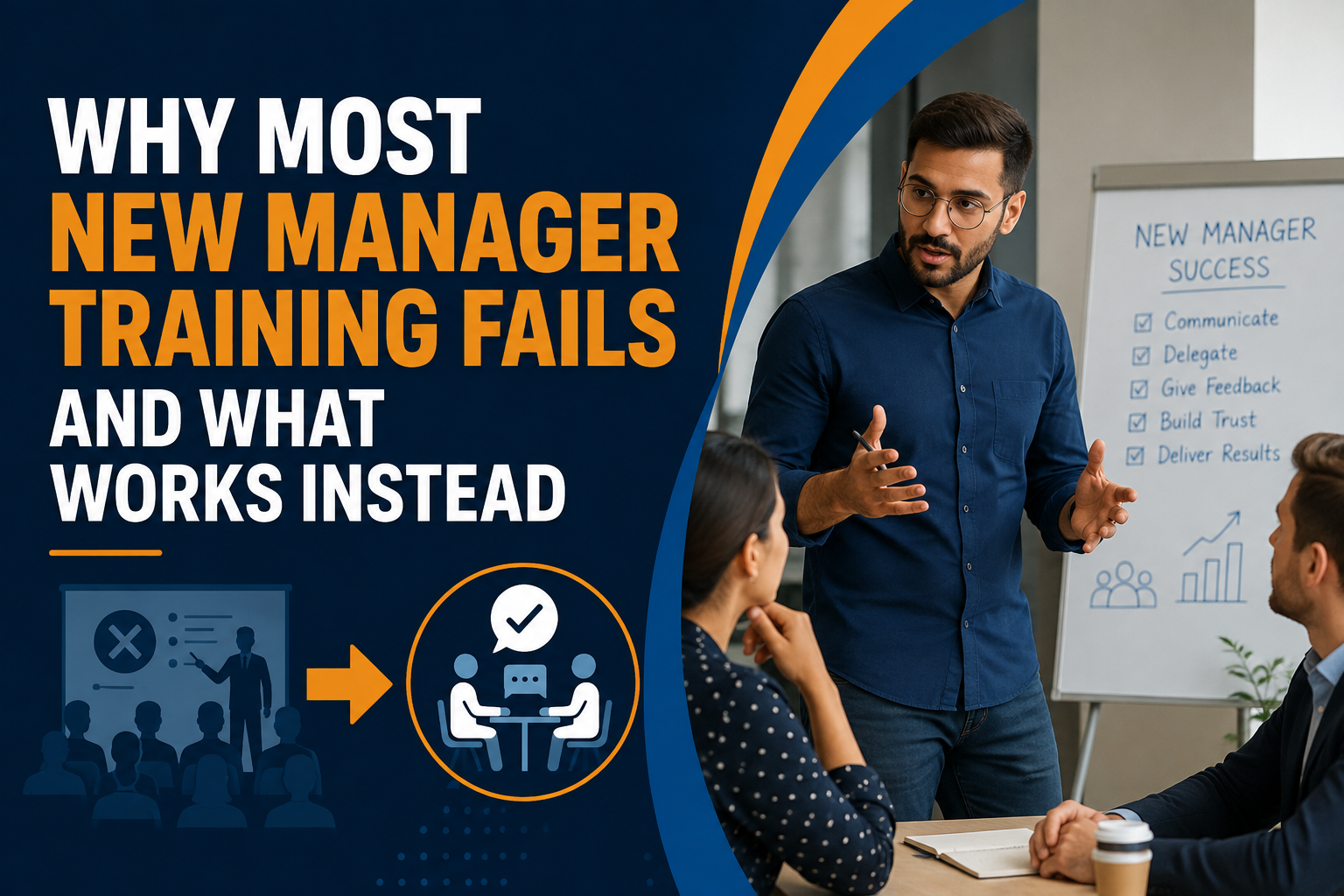
He wasn’t being cynical. He’d just watched too many training cycles come and go; two-day workshops, glossy workbooks, motivational keynotes; and seen the same patterns repeat. A short spike in activity. A few people were energised for maybe three weeks. Then the team drifted back to exactly how they operated before. Quota attainment unchanged. Pipeline quality unchanged. Conversion rates moving sideways.
The tragedy isn’t that sales training doesn’t work. It’s that most organisations are doing a version of it that was never designed to produce lasting change in the first place.
For sales leaders and L&D heads across India’s fastest-growing sectors, whether FMCG, BFSI, telecom, or manufacturing – the pressure to show measurable returns on training spend has never been higher. Global research makes a compelling case for getting this right. McKinsey found that companies implementing role-tailored learning with certification structures are 80% more likely to achieve real commercial outcomes from their training investment, with top-performing organisations reporting a 10–20% gain in sales productivity when coaching is built in alongside the programme. CSO Insights puts the win-rate gap in even starker terms: organisations with high-performing sales training programmes achieved 52.6% win rates, against just 40.5% for those with weaker development infrastructure – a gap that, at scale, translates directly into crores of revenue. Attrition tells a similar story, with well-trained sales teams seeing nearly half the turnover of those without structured development. For organisations that have cycled through one-off workshops and seen little change on the floor, these numbers point to the same conclusion: it’s not that sales training doesn’t work – it’s that most programmes aren’t built to last. That’s the problem DOOR Training exists to solve.
This piece is about what separates performance training that actually shifts numbers from the kind of programme that just fills a calendar slot. It’s for sales leaders, L&D heads, and business owners who are tired of investing in initiatives that feel good in the room but don’t show up in the CRM a month later.
What Sales Training Actually Is - And What It Isn't
What Sales Training Actually Is – And What It Isn’t
Let’s get the definition out of the way, because it matters more than it sounds.
Sales training is the structured process of building the knowledge, skills, and behaviours that help salespeople sell more effectively. That’s the textbook version. In practice, it’s a lot more specific than that; or at least, it should be.
The confusion happens when organisations treat sales training as a single thing. It’s not. It’s a category that contains several very different interventions, and mixing them up is one of the most common reasons training programmes underdeliver.
There’s onboarding training; getting new hires to productivity faster. There’s product and technical training; making sure salespeople can talk about what they’re selling without losing credibility. There’s methodology training; teaching a consistent approach to finding, qualifying, and closing opportunities. There’s coaching; which is ongoing and individualised. And then there’s performance training; which is specifically aimed at diagnosing why results are where they are, and building the capabilities needed to move them.
Each of those requires a different design. A two-day product boot camp doesn’t fix a conversion problem. A methodology workshop won’t help a rep who already knows the steps but freezes during negotiation. Performance training is the most targeted; and therefore the most demanding; of all these forms.
Most leaders think they’re running performance training when they’re actually running information delivery. That distinction matters enormously.
Why Most Sales Training Doesn't Produce the Results People Expect
Here’s the uncomfortable truth: most sales training is designed for inputs, not outcomes.
It measures whether people attended, whether they completed modules, whether they passed a quiz. Sometimes it tracks whether managers felt the content was relevant. What it rarely measures; at least not in a disciplined way; is whether the training actually changed how people sell. And if it did, whether that change produced better results.
There’s a structural reason for this. Training is often bought and evaluated separately from the commercial outcomes it’s supposed to influence. An L&D team measures success by completion rates and satisfaction scores. A sales leader measures success by quota attainment and pipeline velocity. These two things are often managed by different people, with different budgets and different timelines.
So the sales training exists in one place, and the metrics it’s supposed to move exist somewhere else, and nobody’s formally responsible for connecting the two.
The other issue is that performance training is genuinely difficult to sustain. A one-off workshop can introduce a concept, but concept introduction is not behaviour change. For new behaviours to stick; for a sales rep to start using a different questioning approach, or to qualify opportunities more rigorously, or to handle pricing objections with more composure; there needs to be repetition, feedback, and reinforcement over time. That’s harder to buy, harder to deliver, and harder to measure than a two-day event.
Most programmes skip the hard part. That’s why results are disappointing.
The other pattern worth naming: sales training budgets are often released once a year, spent on one event, and then the conversation about ROI happens six months later when nobody can remember what the programme actually covered. No baseline measurement. No agreed success criteria. No mechanism for reinforcement. This is not a training design problem; it’s a procurement problem dressed up as one.
What Good Performance Training Actually Looks Like
I want to be specific here, because “good training” is one of those phrases that gets used to describe almost anything.
Good performance training starts before the training begins. It starts with a diagnostic: where are results falling short, and why? Not assumptions about why; actual data. Pipeline data, win rate data, deal size data, ramp time for new hires. Conversations with managers about where they see reps losing ground. Call recordings, if available. You’re building a map of where capability gaps are costing revenue, before you decide what to teach.
Most organisations skip this. They decide they need “negotiation training” or “prospecting skills” based on a manager’s gut feeling, then wonder why nothing moves on the metrics they actually care about. You can’t fix what you haven’t properly diagnosed.
After the diagnostic comes curriculum design; and the critical thing here is specificity. Generic sales training might give a rep ten techniques for handling objections. Good performance training gives them the three objections they actually encounter most often in your market, with the specific language and framing that works for your buyers, practised in scenarios that look like their real selling situations.
Role-specificity matters too. Performance training for an SDR running high-volume outbound looks nothing like performance training for an enterprise account manager working twelve-month deal cycles. The skills, the mindset, the measures of success; all different. A programme that tries to serve both simultaneously usually serves neither well.
The third thing that separates real performance training from events dressed up as it: reinforcement. Skills introduced in a workshop and then left without reinforcement decay within weeks. Effective programmes build reinforcement into the design; coaching checkpoints, practice sprints, manager accountability. Without those mechanisms, even excellent content becomes expensive background noise.
The Core Areas Every Sales Skills Training Programme Should Cover
There’s no universal curriculum. But there are areas that come up consistently when organisations do honest diagnostics, and they’re worth naming.
Qualification discipline is almost always underdeveloped. Salespeople spend time on deals they shouldn’t, and don’t spend enough time on the ones they should. Sales skills training that builds rigorous qualification habits; whether through MEDDIC, BANT, or a company-specific framework; tends to produce faster improvements in win rate and pipeline quality than almost anything else.
Discovery and questioning is the second area. Most salespeople talk too much and ask too little. More specifically, they ask surface questions and accept surface answers. Effective performance training on discovery teaches reps to go deeper; to understand not just what a customer says they need, but the business problem underneath it, and the personal stakes for the person across the table.
Handling resistance; whether that’s objections, pricing pushback, or the dreaded “let me think about it”; is a third area. What most reps do in these moments is either give in too quickly or get defensive. Neither works. Performance training here is about building composure, and giving reps specific tools for managing these moments without losing the deal or the relationship.
Storytelling and value communication is less talked about but arguably just as important. The ability to articulate why your solution matters; in terms of business outcomes rather than features; is one of the things that separates high performers from average ones. Sales skills training that develops this capability changes how reps show up in front of buyers. Reps who can tell a compelling story about business value routinely outsell those who lead with product specifications, even when the product is identical.
Pipeline and deal management rounds it out. This isn’t glamorous, but it matters. Reps who manage their pipeline with discipline; who maintain coverage, forecast accurately, and know when to walk away; consistently outperform those who don’t, regardless of natural ability. Focused development on pipeline management often gets dismissed as administrative. The teams that take it seriously see the difference in their quarterly number.
Sales Team Training: The Bit That Usually Gets Left Out
Something shifts when you move from training individuals to training a team. And most organisations don’t quite crack it.
Individual sales training builds individual skills. But a high-performing sales team isn’t just a collection of high-performing individuals; it’s a group that operates with shared language, shared expectations, and shared standards. That only happens when training is done together, not just in parallel.
Sales team training done well has a few distinct characteristics. It creates common vocabulary. When everyone on the team goes through the same methodology, they can talk about deals in a consistent way; managers can coach more effectively, reps can get useful input from peers, and patterns across the pipeline become easier to spot. Without that shared language, every deal conversation is a translation exercise.
It also builds team accountability in a way that individual training doesn’t. When a team has learned the same approach together and publicly committed to applying it, the social pressure to actually change is higher. Peer observation, group role plays, team debriefs after real deal reviews; these mechanisms create accountability that a solo e-learning module simply can’t replicate.
The third thing sales team training does, when it’s designed well, is surface your best practice. Every team has one or two reps who are quietly doing something different and getting better results because of it. Group training creates the conditions for that knowledge to be shared; if you structure it properly. That’s free performance improvement, and most organisations leave it sitting on the table.
Scaling Sales Training Across the Organisation
When you’re running sales training across multiple teams, regions, or business units, a whole new layer of complexity shows up; and it’s mostly about consistency.
The challenge isn’t designing one good programme. It’s designing a programme that delivers consistent quality when it’s being delivered by different facilitators, in different locations, to people with different experience levels and different cultural contexts. What works brilliantly in one office can fall completely flat in another if the localisation and facilitation aren’t right.
There are a few things that make performance training work at scale. First, the curriculum needs to be robust enough that it doesn’t rely on a single brilliant facilitator to hold it together. The best programmes at scale have strong materials, clear facilitation guides, and enough structure that a competent trainer in any location can deliver them consistently.
Second, manager capability matters enormously. A programme that only trains the reps decays quickly. Within six months, without reinforcement, research consistently shows that most of what was learned isn’t being applied. Managers are the ones who can reinforce; through coaching conversations, deal reviews, and the standards they hold in day-to-day interactions. If your performance training doesn’t include a serious investment in manager development, you’re setting your reps up to revert.
Third, measurement needs to be centralised. At scale, it’s easy to have ten different regions reporting training metrics in ten different ways, making it impossible to understand whether the programme is working. A single measurement framework; agreed before the sales training launches; makes the data useful across the organisation.
Corporate sales training that ticks all three of those boxes is rare. But when it exists, the impact compounds; each cohort builds on the last, and the organisation gets measurably better at selling over time rather than just cycling through one-off events.
Sales Enablement Training: The Connection Most Organisations Miss
Sales enablement training is a term that means different things to different people. For our purposes, it’s about equipping salespeople with the resources, tools, and knowledge that sit alongside skills; and making sure those things are actually used.
This includes things like: knowing how to use the CRM properly and why it matters. Knowing how to find and deploy the right piece of content at the right moment in a sales conversation. Understanding how to work effectively with marketing, product, and customer success to move deals forward.
This type of enablement work matters more now than it used to, because the modern sales environment is more complex. There’s more content, more technology, more stakeholders involved in a typical purchase decision. A rep who’s technically skilled but can’t navigate that complexity will consistently underperform compared to one who can.
The place where this approach most often breaks down is integration. The tools exist, the content exists, the training exists; but they all sit in separate places, owned by separate teams, and nobody’s responsible for connecting them into a coherent experience for the salesperson. The rep ends up with a skills programme in one place, a content library they barely use in another, and a CRM they treat as a reporting obligation rather than a selling tool.
Good sales enablement training closes those gaps. It makes the connection between the skills you’re building and the resources that support those skills in real selling situations. When performance training and enablement are joined up, reps don’t just know what to do; they have everything they need to do it, immediately accessible in the flow of a real deal.
How to Know Whether Your Performance Training Is Working
This is where most organisations are genuinely weakest; not in identifying that training should be measured, but in building measurement into the design from the beginning.
If you’re only looking at training metrics; completion rates, quiz scores, satisfaction ratings; you’re measuring inputs. You have no idea whether anything changed. Leading indicators of actual behaviour change include things like: coaching session frequency, call quality scores, CRM data quality, and whether reps are following the agreed methodology steps in their pipeline management.
Lagging indicators; the ones that actually reflect business impact; include win rates, average deal size, ramp time for new hires, quota attainment, and pipeline velocity. These take longer to move, and there’s always some attribution complexity (other things affect revenue besides the development work). But if you set a clear baseline before the programme starts, run it properly, and measure the same indicators six months later, you’ll see movement if the performance training is working.
The organisations that do this consistently get better at buying sales training over time. They know what a programme actually delivers, which means they can make better decisions about where to invest next. They also develop a significantly higher internal appetite for performance training, because the ROI is visible rather than assumed.
Building a Sales Training Culture; Not Just a Programme
The highest-performing sales organisations I’ve encountered treat their training not as an event but as an operating rhythm.
There’s a formal programme; structured performance training, probably with an external partner, with a clear curriculum and proper measurement. But there’s also a day-to-day culture where learning is embedded in how the team operates. Managers who debrief after deals; both wins and losses; and use those conversations to coach. Peer learning where strong performers share what’s working. Regular pipeline reviews where the conversation includes not just “what’s the status” but “what’s needed to win this, and do we have the capabilities to do it?”
That kind of culture doesn’t happen by accident. It requires leadership that genuinely values development; not just as a budget line, but as a strategic lever. And it requires managers who’ve been developed as coaches, not just as target-setters.
The paradox is that the organisations that invest most seriously in sales training are usually not the ones with the biggest problems. They’re the ones that already have a performance culture and are using it to compound the advantage. The organisations with the most urgent need for development are often the ones with the least appetite for the investment, because their margins are too thin and their confidence in ROI is too low.
Breaking that cycle requires starting somewhere; a specific cohort, a specific capability gap, a specific metric; and measuring it properly. Proof is the thing that changes the conversation from “performance training is a cost” to “performance training is a return.”
Why the Right Partner Makes the Difference
Let’s be practical about something: not all sales training providers are equivalent, and the cheapest option is rarely the most cost-effective one.
The right partner for performance training is one who starts by listening. Who wants to understand your sales motion, your customer base, your current methodology, and your specific gaps before proposing a curriculum. Who can show you case studies from organisations with similar contexts; not just impressive-sounding client logos. Who builds measurement into the engagement and is willing to be held accountable to it.
The wrong partner is one who shows up with a pre-built curriculum and adjusts the cover slide to include your company name.
At DOOR Training, the approach to performance training is built around diagnosis first, design second. The work starts with understanding what’s actually driving gaps in your specific context; then building a programme to close them, with reinforcement mechanisms and measurement built in from day one.
That’s not the easiest way to sell sales training. But it’s the way that actually works.
FAQs:
Sales training is the broad category; it includes everything from product knowledge to onboarding to methodology development. Performance training is a specific subset focused on diagnosing and closing the gaps between current results and what’s possible. It’s more targeted, more diagnostic in its starting point, and more tightly connected to specific commercial metrics. If your programme isn’t linked to a specific outcome it’s trying to move, it’s probably not performance training.
It depends on what you’re measuring. Behaviour change; reps applying new skills in their selling conversations; can start to show within four to six weeks of a well-designed programme, particularly if there’s coaching reinforcement alongside it. Commercial outcomes like win rate and quota attainment typically take three to six months to move meaningfully. Anyone who promises dramatic revenue impact in thirty days is either measuring something cosmetic or selling something that doesn’t exist.
The honest answer is: it depends on what you’re trying to achieve. Sales team training that involves a lot of role play, live coaching, and peer feedback tends to be more effective in person, because the social dynamics work better. Content delivery and knowledge building can work well virtually if the design is right. Blended approaches; some in-person, some virtual reinforcement; are increasingly common and often the most practical for organisations with distributed teams.
Sales training as a major event; a methodology programme, a skills deep-dive; might happen once or twice a year. But coaching and reinforcement should be embedded in the operating rhythm on an ongoing basis. The reps who improve most consistently aren’t the ones who attend the most training events; they’re the ones who get regular, specific coaching and who operate in teams where learning is a daily habit, not an annual exercise.
Choosing a programme before understanding the problem. Most organisations start with “we need negotiation training” or “we need prospecting workshops”; a solution; when they should start with “our win rates are dropping in competitive deals” or “our pipeline is full but our conversion is falling”; a problem. Sales training bought to solve a vague need delivers vague results. Performance training bought to address a specific, diagnosed gap delivers specific, measurable returns.
The sales team’s buy-in is a function of relevance and respect. If training feels generic; if it’s covering things experienced reps already know, or using scenarios that don’t match their actual selling context; you’ll lose the room quickly. Reps are practical people. They’ll engage seriously with sales skills training that feels directly useful to their work, and they’ll check out of training that feels like a box-ticking exercise. Involving respected performers in the design and delivery of the programme; not just as attendees; also changes the culture around it.
This is probably the most underestimated factor in whether sales training produces lasting results. Research consistently shows that training without manager reinforcement decays significantly within 90 days. Managers who coach; who hold regular deal reviews, who give specific feedback on how reps are applying what they learned, who model the methodology themselves; create the conditions for behaviour change to stick. Sales training that doesn’t develop the managers alongside the reps is training that’s halfway done.
Absolutely, as long as it’s designed appropriately. The ROI on sales skills training isn’t a function of team size; it’s a function of how well the training is designed for the specific context and how rigorously it’s measured. A ten-person team with a well-designed, properly reinforced performance training programme will outperform a fifty-person team running generic corporate sales training that nobody’s accountable for.
Final Thoughts
Sales training done well is one of the highest-leverage investments a business can make. A team that qualifies better, discovers more effectively, communicates value more clearly, and handles resistance with more composure will consistently outperform a team of similar natural ability that hasn’t had that development. The maths on this is straightforward.
What’s less straightforward is doing it well. Most programmes underdeliver not because training doesn’t work, but because the design is too generic, the diagnosis is skipped, the reinforcement is absent, and the measurement is cosmetic.
If you’re evaluating whether to invest in performance training for your team, the honest question to ask is: are we prepared to do this properly? That means diagnosing before designing, building reinforcement into the programme, developing managers alongside reps, and committing to measuring actual commercial outcomes; not just completion rates.
If the answer is yes, the return is real. If the answer is “we just need something quick,” the two-day workshop will happen, the workbooks will be read, and in ninety days you’ll be back to the same conversation.
The choice is fairly clear, once you’ve seen it play out a few times.
Ready to see what a properly designed sales training programme looks like for your team? Talk to us at DOOR Training and let’s start with the diagnosis.