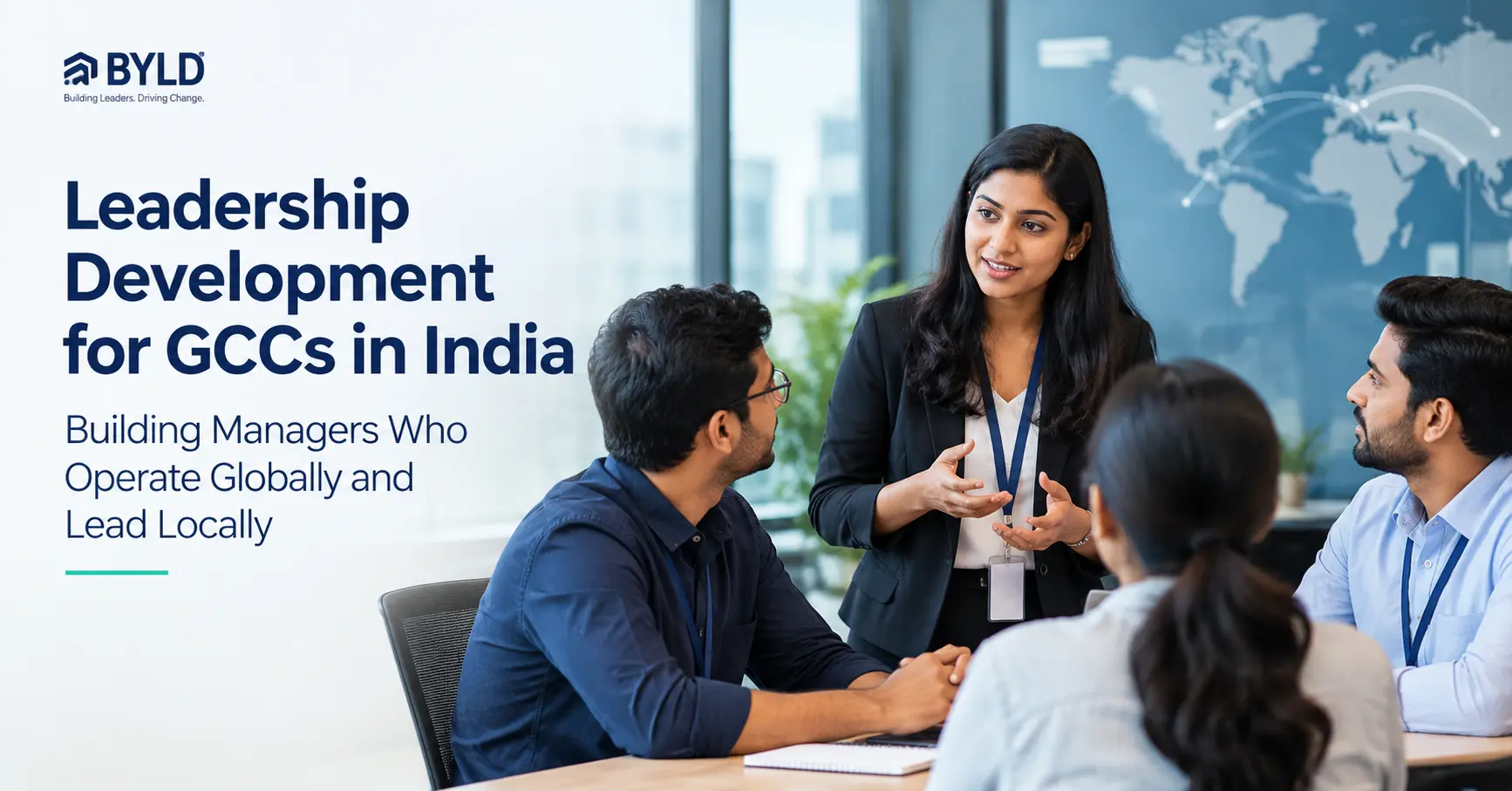
The capabilities of India’s global centers of excellence no longer function as an extension of the back office at their head office. The centers now own products, control P&L, and take decisions that were once the sole prerogative of the headquarters. However, this change has led to a problem that the majority of such centers were not ready for – the managers who are leading such centers were chosen based on their technical skills and not their ability to lead.
Why Global Capability Centers in India Need a New Leadership Playbook
India now hosts one of the largest concentrations of global capability centers in the world, and the ecosystem has grown fast enough that leadership pipelines have not kept pace. According to the Zinnov-Nasscom GCC Value Orbit Report (FY2026), India is home to 2,117 GCCs employing 2.36 million professionals and generating USD 98.4 billion in revenue, a 32% jump since FY2021.
A situation like this implies that hundreds of contributors are forced to assume a managerial role every quarter without any formal preparation at all. It is clear what happens when the GCC increases its manpower faster than its number of managers: disengagement, higher attrition rates in vital processes, and a growing disparity between expectations of leadership and what line managers can achieve. This is the reality in which training for new managers in GCCs becomes a necessity rather than just an option.
The New Manager Reality Inside India's GCCs
GCCs generally promote internally. Good analysts are promoted to lead analysts, and good engineers are promoted to managers. The very technical judgment that helped them earn the promotion does not necessarily include skills in mentoring or giving feedback, nor does it include the ability to talk tough to someone who was their peer but is now reporting to them. It’s the beginning of every discussion on challenges of a new manager in a GCC context, and it is why there must be a different way of thinking about manager training.
Layered on top of the usual first-time manager learning curve is the specific texture of GCC work: managers often report to a global function head sitting in a different time zone, sit on matrixed teams, and are expected to represent “India” credibly in rooms where they have no direct authority. That combination new to management and new to operating globally is exactly why generic, off-the-shelf training rarely holds up in this environment.
Ready to Build Managers Who Lead Globally?
Move beyond one-off workshops and give your first-time managers a phased program that shifts mindset, builds coaching skills, and plugs practical tools into their everyday work.
Explore Leadership ProgramsCommon New Manager Challenges in GCC Environments
The recurring difficulties that show up most often in GCC leadership development programs tend to cluster around a few themes:
- Directive habits die hard: First-time managers tend to fall into the habit of bossing people around as a result of the way they themselves have been managed, and it is a quicker method. Breaking the habit of bossing around is probably one of the hardest habits to unlearn since it involves doing something very different.
- Virtual and cross-functional coaching: GCC managers frequently lead hybrid or fully remote teams and collaborate with global counterparts, which makes “coaching in the moment” much harder to practice and observe.
- Lack of a shared vocabulary: Due to a lack of common language for discussing performance, development, and feedback, managers from the same organization tend to address similar issues in different ways.
- No structured tools: Many new managers have never used a coaching prep sheet, an opportunity map, or a feedback starter simple tools that turn a vague intention to “be a better manager” into a repeatable practice.
- Time pressure: Delivery deadlines rarely pause for a manager to build a new skill, so this kind of development has to fit around live project work rather than replace it.
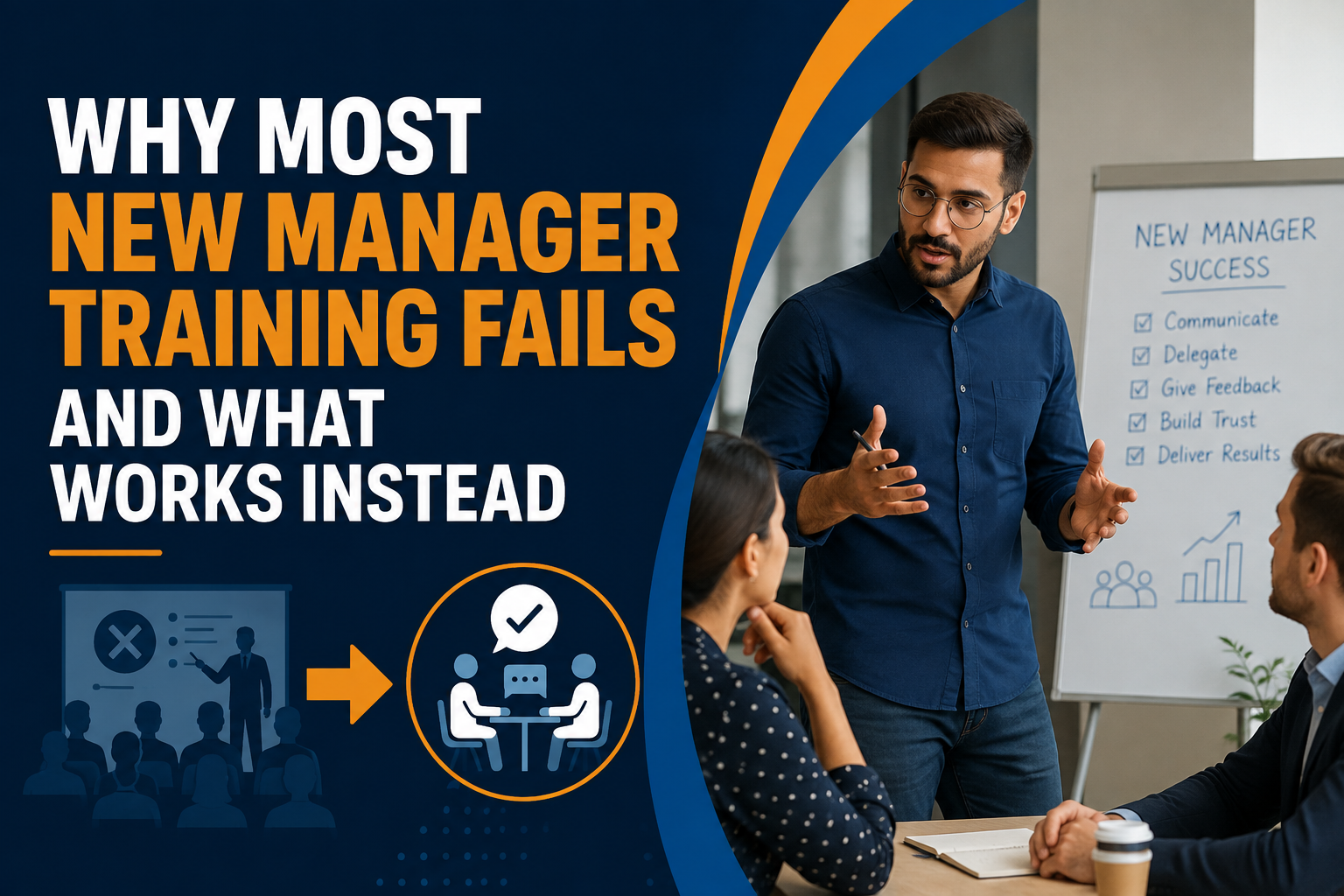
Solving these problems consistently is exactly why organizations are moving away from one-off workshops and investing instead in structured, phased first-time manager training GCC programs that are built into the manager’s actual job, not bolted on beside it.
Why First-Time Manager Training GCC Programs Fail Without Structure
A one-off leadership workshop alone won’t drive change. The single biggest problem with why initial management training programs by GCC programs fail is that they only create awareness. Participants return from a workshop feeling motivated, but no aspect of their work schedule or performance management system has changed since then. Skills that aren’t backed by tools don’t last long, and tools that lack a leader’s buy-in get quickly put aside.
Effective first-time manager training GCC programs are designed around the opposite assumption: that a mindset shift, a new skillset, and a concrete toolset have to be built together, and that senior leaders have to visibly use the same behaviors they’re asking managers to adopt.
What Effective Training New Managers Actually Looks Like
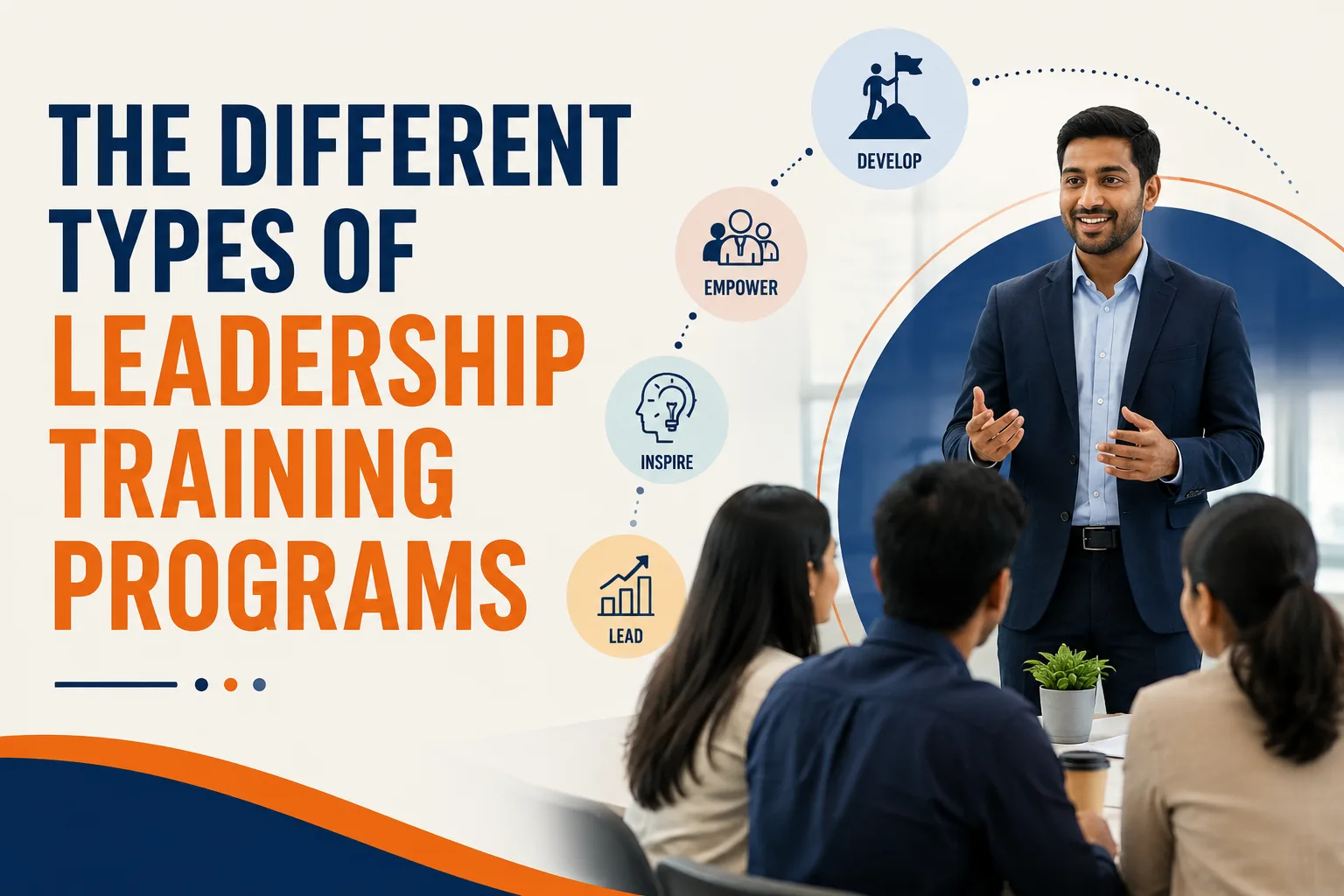
Well-designed GCC leadership development programs tend to follow a similar three-part arc, regardless of function:
- Mindset shift: Leadership briefings and executive workshops make the business case for coaching over directing, reframing the manager’s job from problem-solver to enabler of performance.
- Skillset development: Managers practice structured performance, development, and feedback conversations using real-world scenarios drawn from their own function, not generic case studies.
- Toolset integration: Managers are given simple, repeatable tools coaching prep sheets, opportunity maps, feedback starters, and coaching gets built into one-on-ones, project reviews, and development planning rather than treated as an extra task.
This is what makes the real capability development different from mere compliance. This is also the format that has been followed in one of the most enlightening examples of a GCC leadership development program.
A Few Things the Best Programs Get Right
Beyond the mindset-skillset-toolset arc, a handful of practical choices tend to separate GCC leadership development programs that stick from ones that fade after the first quarter:
- Leaders go through it first: Functional heads and senior management attend training sessions before managers attend because they can set an example and not just encourage it from afar. If the programs are implemented without doing this, the outcome is enthusiasm during the workshops and nothing else in terms of actual behavior change.
- Coaching gets attached to existing rituals, not a new one: The tools will be most effective when they emerge during the existing one-on-one and project review meetings between managers and their teams, rather than creating an additional “coaching session,” which can become a rival to deliverable deadlines.
- Scenarios come from the manager’s own function: Practicing a feedback conversation using a real R&D, quality, or operations scenario builds confidence far faster than a generic case study borrowed from an unrelated industry.
- A small set of leading indicators gets tracked from day one: Attrition in target functions, manager feedback scores, the frequency of documented coaching conversations, and internal mobility are far more useful than attendance numbers for telling leadership whether the investment is working.
- The rollout is sequenced, not simultaneous: It is also very important for a program to be cascaded from higher executives to lower management levels, unit by unit, where the people below see firsthand the proof that the upper levels are performing the job, rather than the content of the training itself.
Building GCC Leadership Development Programs That Scale Across Functions
The lesson here is that these efforts work best when they aren’t confined to one function or one level. A first-time manager cohort in engineering benefits from the same underlying framework as one in finance, quality, or customer operations; the conversations look different, but the mindset, skill set, and toolset arc stays the same.
The process of scaling up such a program to a broader network of global capability centers also relies on measurement. Companies that monitor attrition rates, manager feedback ratings, number of recorded coaching interactions, and internal mobility know better whether their investment in time and effort yields results or not.
Measuring the ROI of Training New Managers
That there is a clear business need for being able to do so is not an unsubstantiated claim; the results from the research carried out by Gallup state that less than one person out of ten has a natural ability to become an excellent manager, and companies have only an 18% chance of hiring the one with the required skills. That statistic is precisely why training new managers deliberately, rather than assuming management ability will simply emerge with tenure, matters so much inside fast-growing GCCs.
This changes the nature of leadership development from being an intangible Human Resources initiative to something tangible that can actually impact attrition and engagement in addition to the strength of the internal leadership bench.
Bringing It Together
Indian global capability centers have surpassed the idea that management skills emerge organically. With regard to the numbers involved in recruiting and operating in different geographies, together with the documented fact that there is very little managerial talent naturally available, the process of leadership development has become an integral part of safeguarding talent within the best companies.
The centers that get ahead of this rather than treating it as an afterthought once attrition numbers start climbing tend to build a durable advantage in retention, engagement, and the depth of their internal leadership pipeline. Organizations that invest early and that keep addressing challenges as they evolve are the ones building leadership benches capable of leading locally while operating on a genuinely global stage.
Frequently Asked Questions
First-time manager training GCC refers to structured leadership development designed specifically for individual contributors stepping into people-management roles inside a Global Capability Center. It’s built for managers who are new to leading a team and often new to operating across global, matrixed, or virtual structures at the same time.
GCCs operate under conditions that generic training doesn’t account for: cross-time-zone reporting lines, matrixed accountability, and the expectation that India-based managers represent their function credibly to global stakeholders. Leadership development built specifically for these centers addresses these dynamics rather than treating management as a one-size-fits-all skill.
The recurring new manager challenges include falling back on directive habits instead of coaching, struggling to coach in virtual or cross-functional settings, lacking a shared vocabulary for feedback and development conversations, not having structured tools to guide those conversations, and finding little dedicated time given ongoing delivery pressure.
Organizations that roll out a structured, phased program typically start seeing measurable shifts in manager feedback scores, coaching frequency, and attrition in target functions within about six months, though sustaining those results depends on continued leadership sponsorship, not just the initial rollout.
Strong GCC leadership development programs are built around a phased arc mindset shift, skill set development, and toolset integration rather than a single workshop. They also require senior leaders to go through the same experience first, so they can model the behaviors they’re asking managers to adopt.
Functional heads and senior leaders should go through the program before or alongside the managers they oversee. Case evidence shows that leadership alignment, role-modeling coaching behavior, and sponsoring coaching circles are critical success factors in making the training stick beyond the initial rollout.